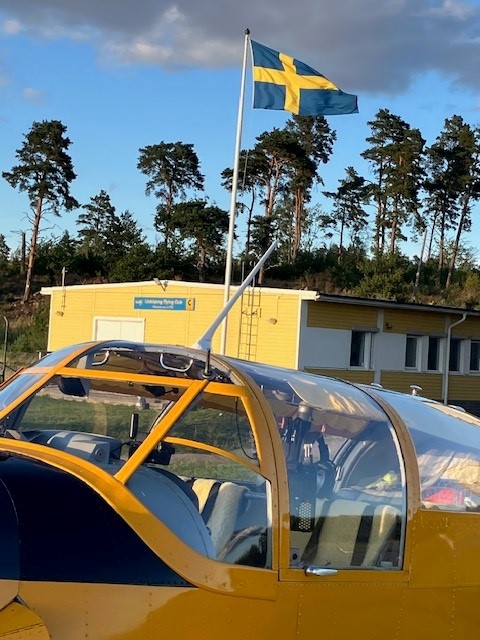
August 16-17 the yearly Saab Safir Meeting was held in Linlöping at Saab Airport (ESSL). The meeting was arranged by MVFK – Malmen Veteran Flying Club together with LFK – Linköping Flying Club and ÖFS – Östgöta Flight Historical Society.
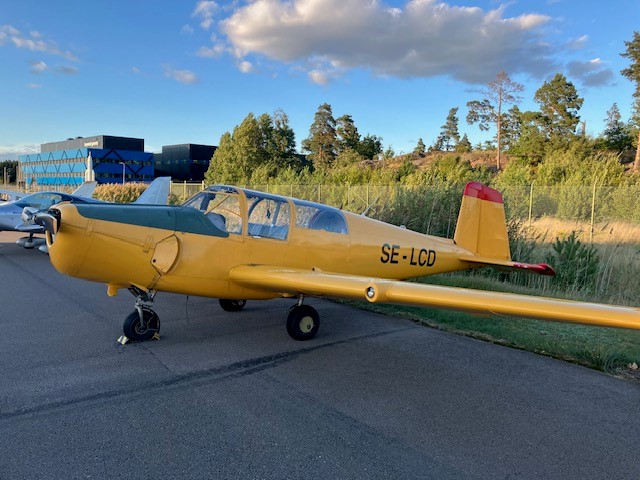
Six Safir aircraft and many Safir pilots and technicians attended the meeting. The meeting was combined with a Fly-In with more arriving aircraft and also a sale (”Loppis”) of old aircraft related books and equipment.
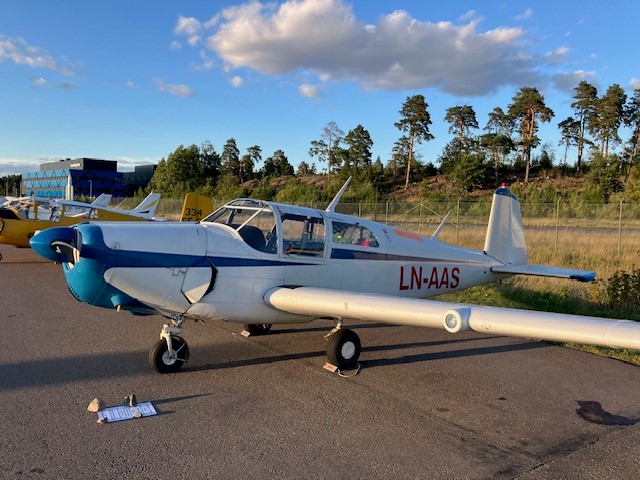
The most interesting (and maybe oldest flying) Safir attending the meeting was LN-AAS (previously SE-BNL/SE-BNZ). This aircraft was manufactured in 1948 as a prototype 91B Safir, but with a 91A Gipsy Major Engine. The aircraft was used as a test aircraft at Saab in Linköping and was during a brief period in 1957 owned by Linköping Flying Club. So to speak it visited the old home airfield! It was in 1966 converted to a 91D Safir. In 2003 it was sold to Norway and registred as LN-AAS.
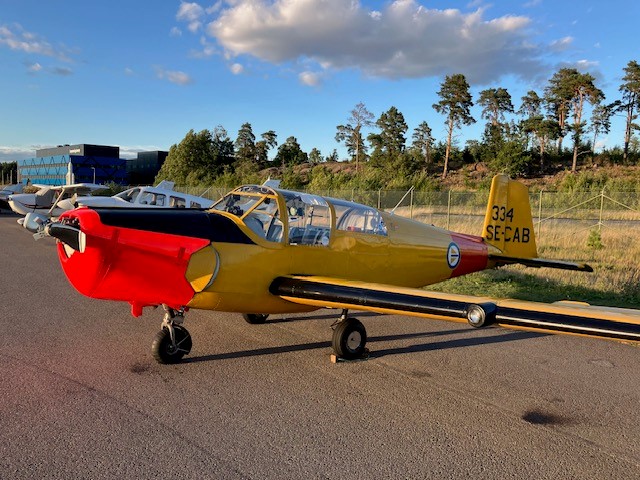
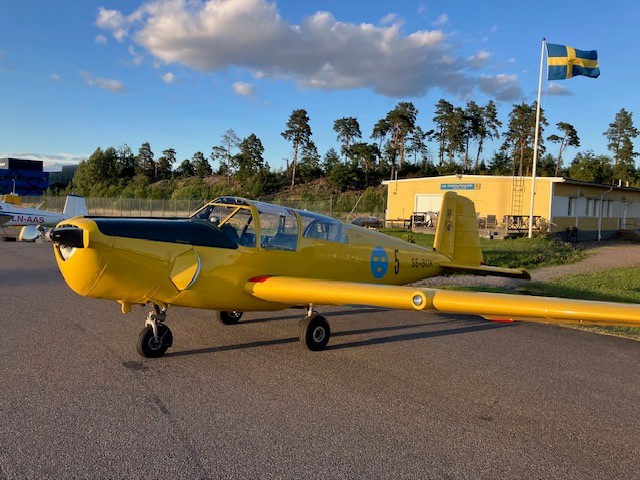
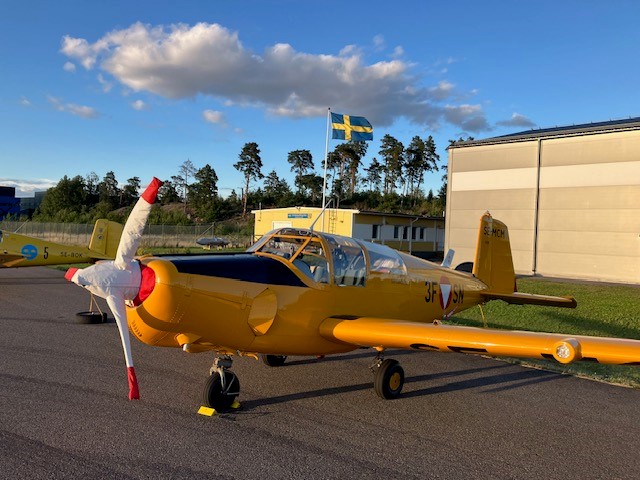
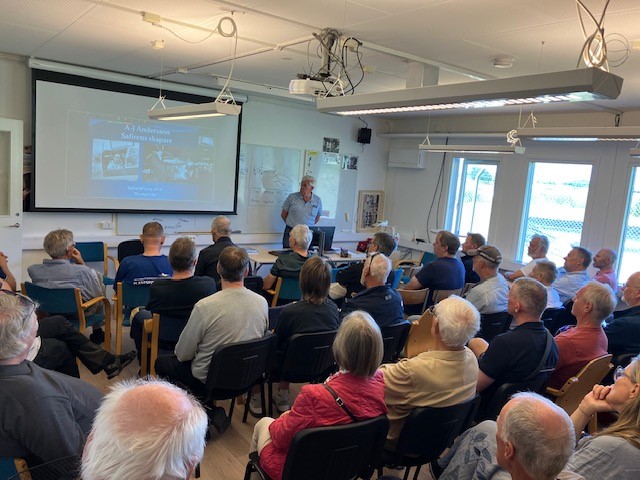
The meeting started with a presentation by Thomas Lilja of Saab Safir project manager A.J. Andersson. Extra fun was that one of A.J. grand children attended the meeting! Thomas also included a overview of the development of Saab Safir.
The next presentation was by Kjell Franzén and this was about the new rules in Sweden to classify an aircraft as an ”aircraft of cultyrally interesting value” according to new rules TSFS 2021:44. Unfortunately the rules requires that the aircraft must be airworthy and has been used in Sweden. This leaves out imported Safir from Norway, Finland etc. But for those that meets the requirements it will reduce the yearly costs to keep the aircraft airworthy.
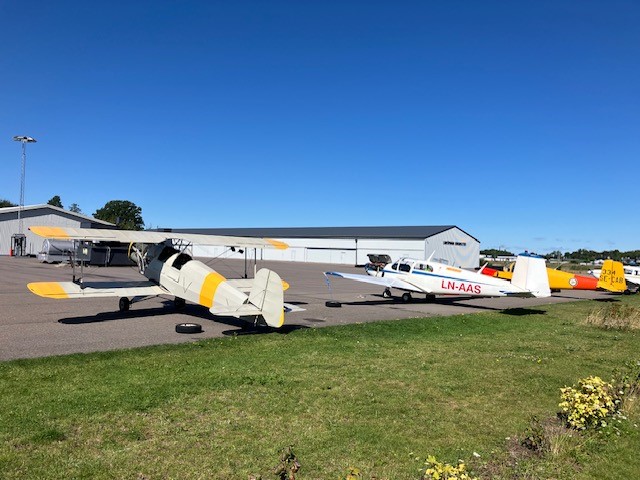
During the coffe break Per Wernholm performed an engine start of a Bücker Jungmann (the first aircraft constructed by A.J. Andersson). This aircraft is ongoing repairs and will hopefully return to the skies again in 2026.
The meeting continued with a discussion regarding changed rules for experimental aircraft in Sweden. BCL-M 5.2 has been replaced by TSFS 2024:55. According to this update experimental aircraft are only those that are built to more than 51% by an amateur builder. All Saab Safir are built in aircraft factories.
Over the years the guidelines regarding Safir has changed many times. Some Safir owners have succeded in transfering their aircraft to the experimental EAA registry. At the previous Safir Meeting it was decided that representatives of the Safir community in Sweden should meet representatives from Transportstyrelsen. After the first meeting they received an informal mail stating that Safir could, even with the new rules, be transfered to experimental registry. But this changed and the last response is that no further Saab Safir will be permitted to be reclassified as experimental aircraft.
This will cause future problems!
Today some Safir owners prefer to keep their aircraft maintaned in a controlled environment by a certified maintenance engineer. This in order for the aircraft to be used by approved or declared flight training organisations and also for use by FFK – Swedish Volunteer Air Corps.
There is an ongoing discussion at Saab regarding the future for the type certificate of Saab Safir as well for MFI-9/-15. Without a type certificate holder the only way forward to operate a Safir is according to experimental rules.
The other major problem is that it is more and more difficult to find spare parts according to the approved Safir Spare Parts manual. For example there is ongoing work to replace the Lycoming O-435 engine used in Saab 91B/C Safir with a Lycoming O-540 engine. This can not be done on a cerified aircraft without a supplementary type certificate. The only way forward is therefore according to experimental rules.
The next discussion was regarding spare parts. A few years ago the Safir spare part supply storage (known as ”Safirparaplyet”) at Flygkonsulterna in Malmö was transferred to SFH – Safir Flying Heritage. MVFK also has a storage of Safir parts in Linköping that today is difficult to use since the storage is within Saab aircraft facilities and therefore the access to this area is very limited due to increased security rules. At the meeting it was decided that MVFK and SFH will discuss the way forward to transfer MVFK stores to SFH. One problem is to find a storage area big enough for all the parts. MVFK also have propeller maintenance equipment that is needed for experimental aircraft maintenance.
The meeting ended with a presentation of what has happened to Safir aircraft that were used by the Swedish Air Force Personell Flying Clubs. Approximately 10 out of 33 aircraft are today still airworthy. The legacy of the clubs is the preservation of Safir aircraft and the public interest in Safir aircraft due to public exposure by among others Team 50.
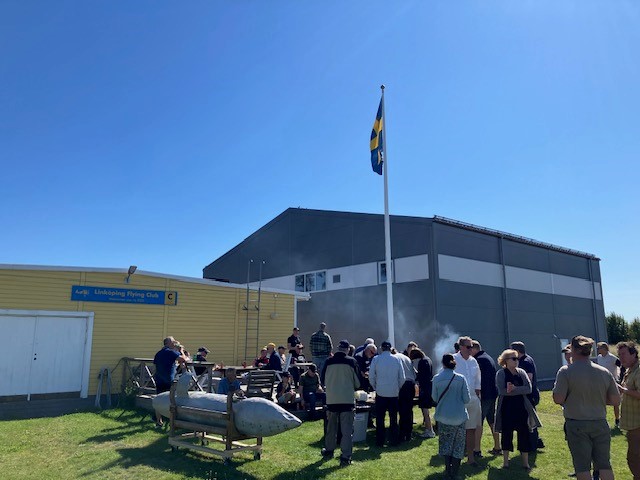
Saturday ended with a Hangar Party with about 40 guests. On the meny was a mixed barbecue and coffe/cake for desert.
On Sunday there was a plan for a formation flight, but the windy weather did not approve with this. One of the departing Safir performed a fly-by in order to honour Jan Andersson, the son of A.J. Andersson.
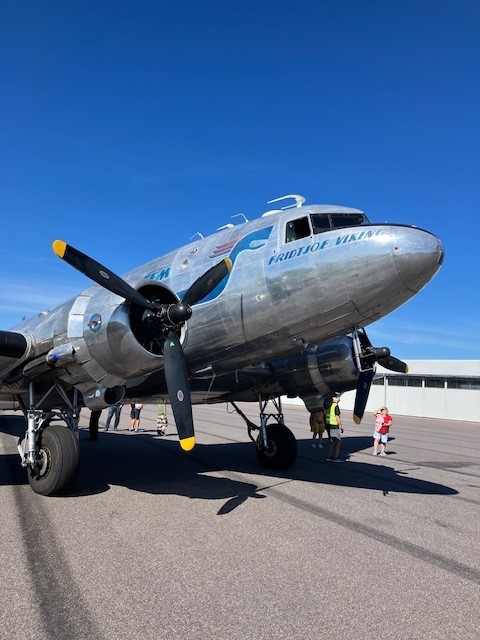
The only airworthy Swedish DC-3 ”Daisy” visited Saab airport and was welcomed by the flying club members. After some difficulties to taxi through the gates to the apron (the center line of the taxiway is not the center line through the gate) they succeded in pwrforming a local flight above Linköping as well as transporting back a nomber of passangers that visited the Air Force Museum during the day.
Many thanks to all visiting aircraft and pilots and most of all to everyone who helped to make this a nice weekend in Linköping! Maybe next year Safir Meeting will be held in Norway?
 MVFK
MVFK 